Can mindfulness meditation improve self-regulation and reduce cravings? Explore a randomized clinical trial by Guang-Heng Dong and colleagues from Yunnan Normal University, Hangzhou Normal University, NuanCun Mindful-Living Mindfulness Center, Zhejiang Normal University, Yale University School of Medicine, Yale University, and the Connecticut Council on Problem Gambling. The study involved 64 adults and investigated how mindfulness meditation influences gaming cravings and brain activity in regions associated with reward processing and cognitive control.
How Does Mindfulness Meditation Influence the Brain?
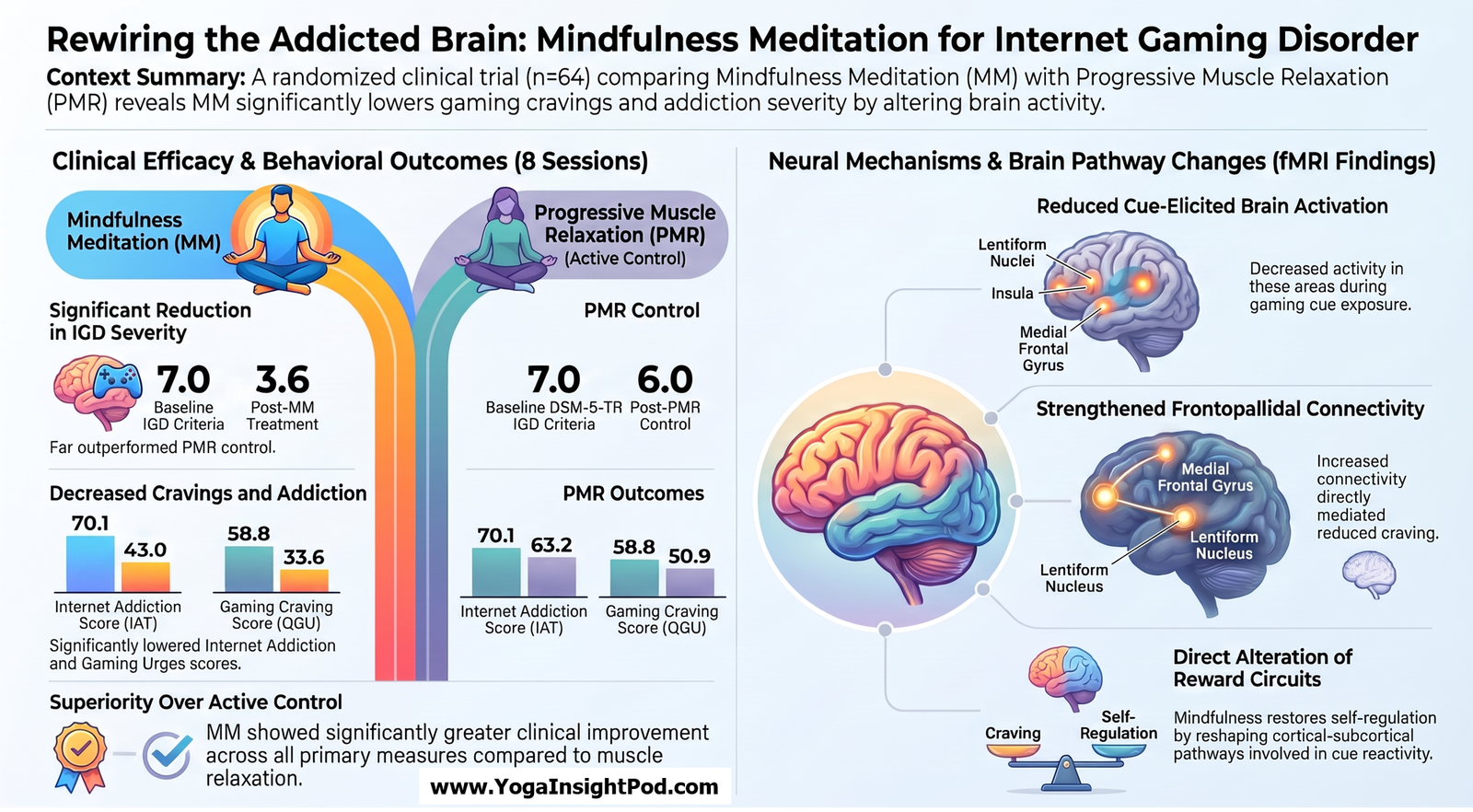
Mindfulness meditation encourages individuals to observe thoughts, emotions, and urges without immediately reacting to them. But can this practice produce measurable changes in brain activity? A 2024 randomized clinical trial published in JAMA Network Open by Haosen Ni and colleagues investigated the effects of mindfulness meditation on 64 adults experiencing internet gaming disorder.
What Did the Researchers Investigate?
Participants completed eight sessions over four weeks of either mindfulness meditation or progressive muscle relaxation. The mindfulness intervention emphasized attention, present-moment awareness, and nonjudgmental acceptance. Researchers evaluated changes in cravings, symptom severity, and brain responses using functional magnetic resonance imaging (fMRI).
What Did the Study Discover?
The mindfulness meditation group demonstrated significantly greater reductions in gaming cravings and symptom severity compared with the relaxation group. Brain imaging revealed decreased activation in regions associated with craving and reward processing, including the lentiform nuclei, insula, and medial frontal gyrus. Researchers also observed increased functional connectivity between brain regions involved in craving-related processing, suggesting a possible neural mechanism underlying the benefits of mindfulness.
What Does This Mean?
These findings suggest that mindfulness meditation may help individuals respond differently to cravings by cultivating awareness and acceptance rather than automatically acting on impulses. Although additional research is needed to establish long-term benefits, this study provides promising evidence that mindfulness meditation can influence both behavior and brain function.
Explore more research-based insights on mindfulness meditation at www.YogaInsightPod.com.