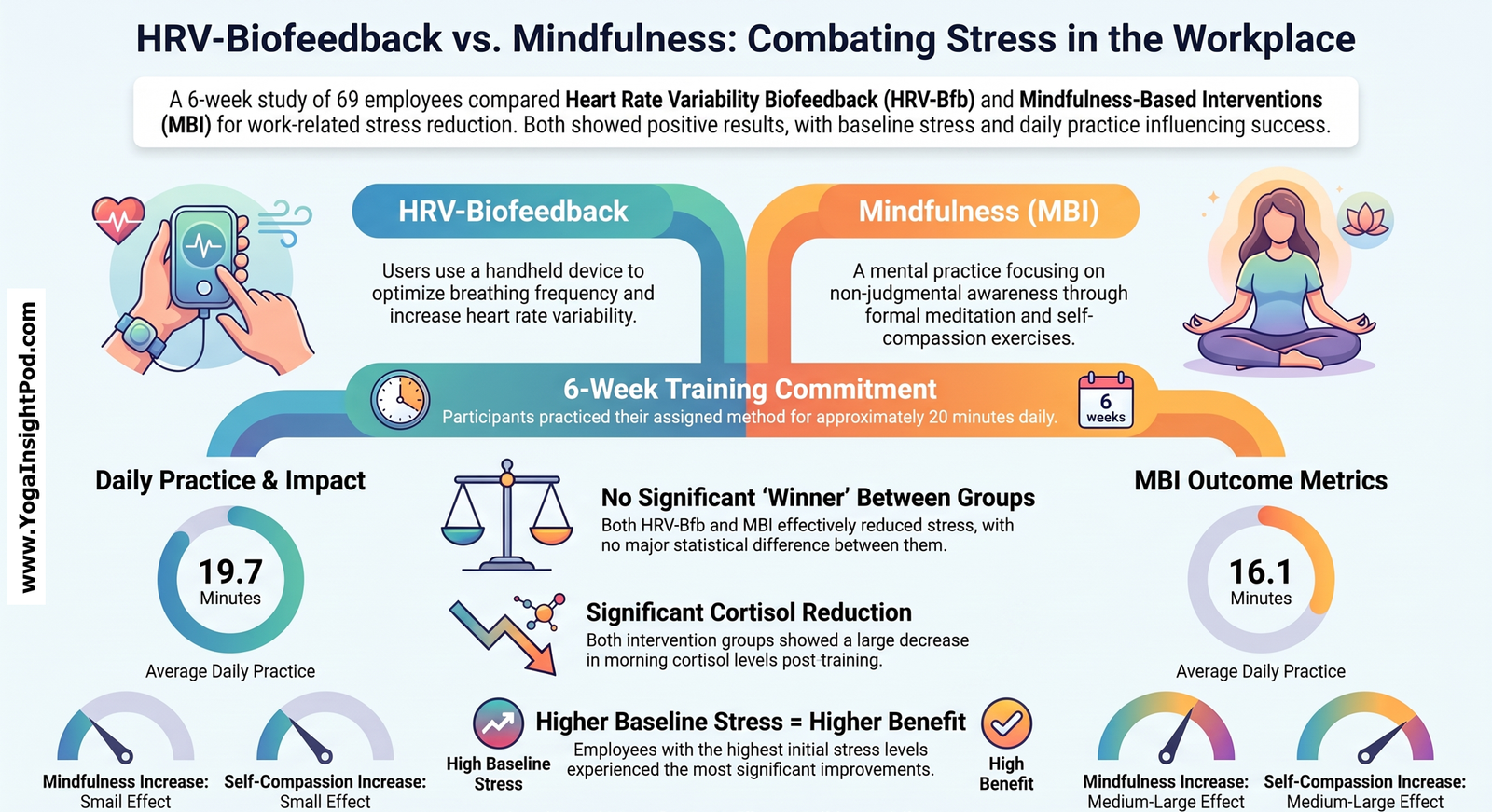
A six-week randomized controlled trial by Amelie Edith Brinkmann and colleagues from the University of Tuebingen, ARCIM Institute for Academic Research in Complementary and Integrative Medicine, Harvard Medical School, and University Hospital Tuebingen compared mindfulness training with HRV biofeedback for workplace stress reduction. The findings showed increases in mindfulness and self-compassion within the mindfulness group, while also highlighting the challenges of interpreting workplace stress interventions in real-world organizational settings.
Workplace stress has made mindfulness increasingly attractive as a practical strategy employees can use throughout the day. But how well does mindfulness actually work when compared with another stress-management method?
Researchers conducted a three-arm randomized controlled trial comparing a mindfulness-based intervention (MBI), heart rate variability biofeedback (HRV-Bfb), and a wait-list control. Participants received training and then independently practiced for six weeks, with follow-up measurements 12 weeks later. The mindfulness program drew from Mindfulness-Based Stress Reduction while incorporating self-compassion, acceptance and commitment therapy, and Mindfulness-Based Cognitive Therapy. Practices included mindfulness of breathing, thoughts, feelings, and physiological sensations, along with short informal pauses in which employees intentionally returned their attention to the present moment without judgment. The results require nuance. Mindfulness did not significantly outperform HRV biofeedback or the wait-list group on overall stress outcomes. Chronic stress declined from pre- to post-intervention in all three groups.
However, only the mindfulness group showed statistically significant within-group increases in mindfulness and self-compassion, both immediately after the intervention and at follow-up. The authors also noted that effect sizes suggested mindfulness might have a slightly stronger stress-reduction effect than HRV biofeedback, but emphasized that the small sample requires caution. Perhaps the most important lesson is that mindfulness may help employees change how they relate to stressful experiences but workplace workload and organizational conditions still matter.