Can intentional changes in breathing influence consciousness and psychological well-being? Discover what a scientific study by Martha N. Havenith and colleagues from the Ernst Strüngmann Institute for Neuroscience, MIND Foundation, Charité–Universitätsmedizin Berlin, Maastricht University, Somnivore Pty. Ltd., Imperial College London, Universitätsklinikum Ruppin-Brandenburg, University of California San Francisco, Universitätsklinikum Hamburg-Eppendorf, German Center for Mental Health, and OVID Clinics reveals about circular breathwork, changes in carbon dioxide (CO₂) levels, and the mind-body connection.
How Breathwork Influences Consciousness
Can the way we breathe change how we experience the world? A 2025 study published in Communications Psychology provides intriguing insights into the relationship between breathing patterns, carbon dioxide (CO₂), and altered states of consciousness.
Researchers investigated 61 experienced breathwork practitioners using two approaches: Holotropic Breathwork and Conscious-Connected Breathwork.
What Did the Researchers Discover?
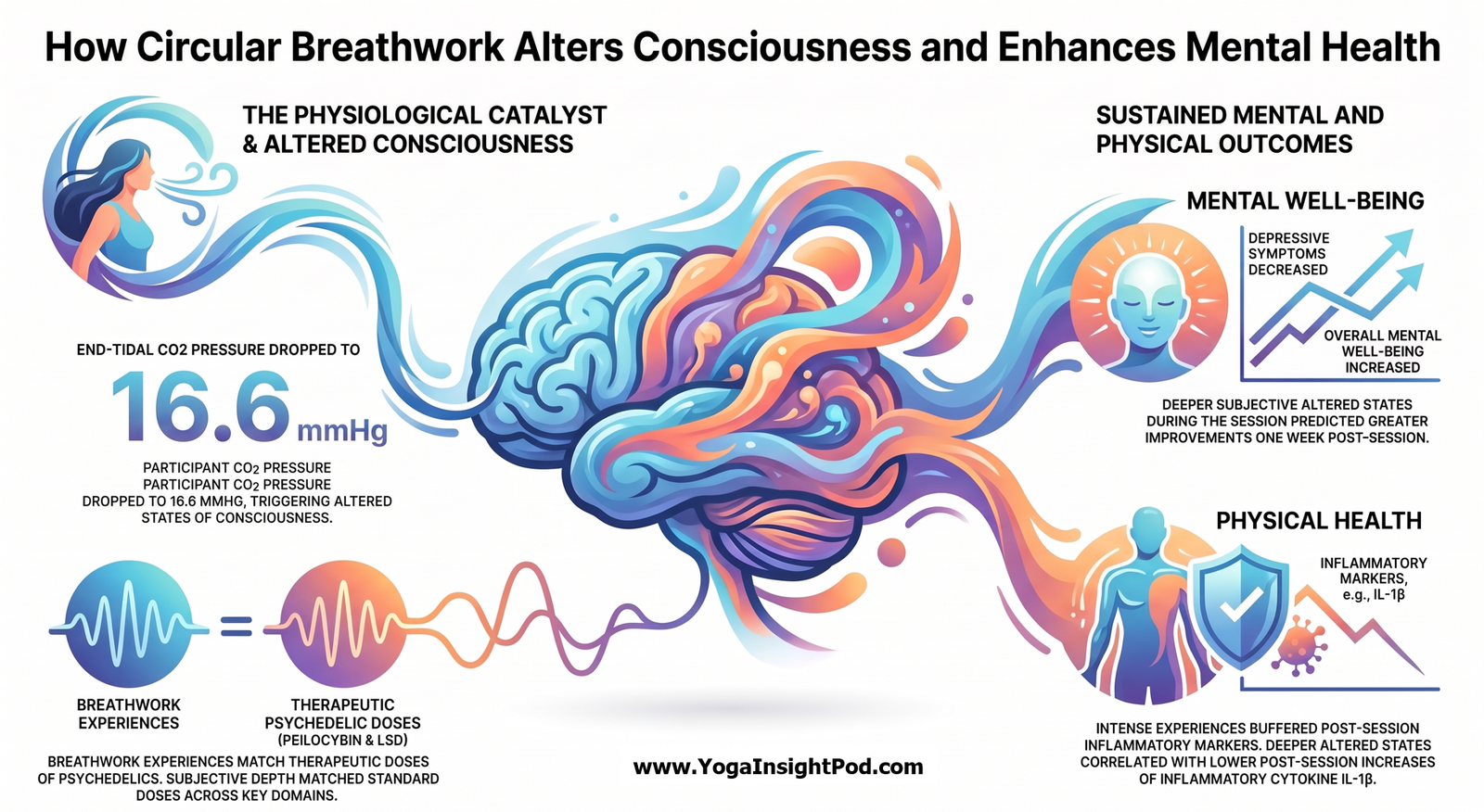
Participants who engaged in active circular breathing experienced substantial reductions in end-tidal CO₂ pressure. These reductions were associated with deeper alterations in consciousness, including experiences of unity, emotional intensity, and changes in self-perception.
Interestingly, some subjective experiences resembled those reported in psychedelic research, despite the absence of psychoactive substances.
Can Breathwork Improve Well-Being?
One week after the session, participants in the active-breathing group who completed follow-up questionnaires reported improved psychological well-being. Deeper experiences during breathwork were also associated with greater improvements in well-being.
Both breathwork approaches produced broadly similar physiological and psychological findings, despite differences in session duration.
What Does This Mean?
The findings highlight the potential relationship between intentional breathing, physiological changes, and subjective experience. However, this exploratory study involved experienced practitioners, and larger studies are needed to establish long-term benefits and safety.
Explore more evidence-based breathwork, yoga, and mindfulness research at www.YogaInsightPod.com.