A 2026 neuroimaging study by Estelle T. Higgins and colleagues from Center for Healthy Minds, University of Wisconsin-Madison, University of Wisconsin School of Medicine and Public Health, University of Pittsburgh examined how eight weeks of MBSR changed brain responses to emotionally challenging information. The findings offer intriguing insights into mindfulness, emotional regulation, stress, and mind-body interactions.
What happens in the brain when someone completes an eight-week Mindfulness-Based Stress Reduction program?
A 2026 study by Estelle T. Higgins and colleagues investigated this question using functional MRI. Adults were randomized to eight weeks of MBSR or a wait-list control group, with brain activity measured while participants responded to emotionally salient information.
The MBSR program included focused attention on the breath, bodily sensations, and mental content, practiced while sitting, walking, and using yoga postures. Participants attended weekly sessions, an intensive retreat, and completed daily home practice.
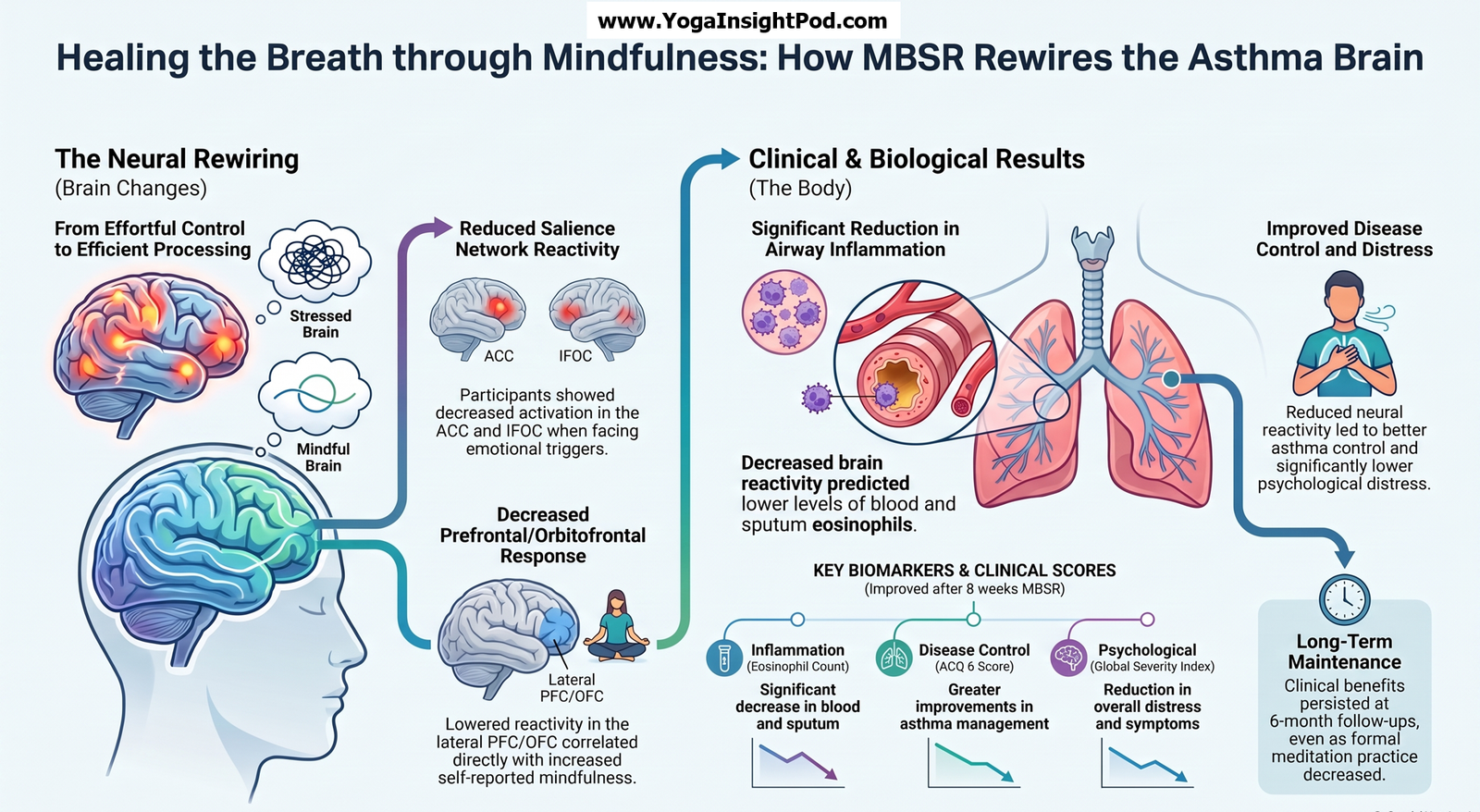
Following the intervention, participants receiving MBSR showed reduced activation in several brain regions involved in attention and emotional processing. Importantly, increases in self-reported mindfulness were associated with reductions in neural responses across areas including the prefrontal cortex, insula, and anterior cingulate cortex. The researchers suggest these patterns may represent more efficient and less effortful regulation of emotional information, rather than simply greater cognitive control. Skills central to mindfulness such as non-reactivity, acceptance, and non-judgmental awareness may reduce the need to continually engage effortful regulatory processes.
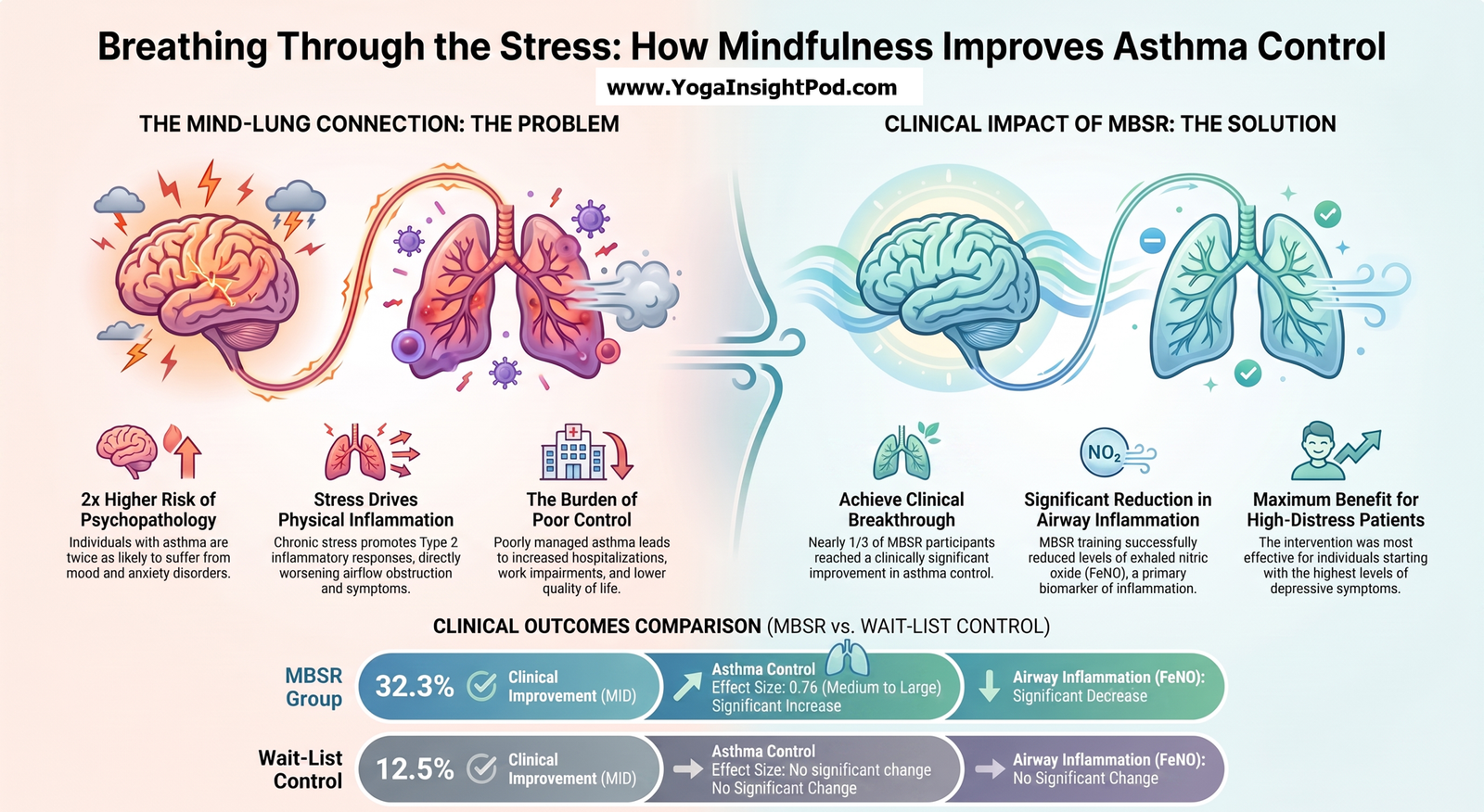
Changes in these neural networks were also associated with improvements in psychological distress and inflammatory measures, highlighting a potentially important mind-brain-immune connection. The findings are correlational, however, and do not establish the direction of causality. The study provides an intriguing window into how mindfulness practice may influence not only how we experience stress, but also how the brain processes emotionally significant information.