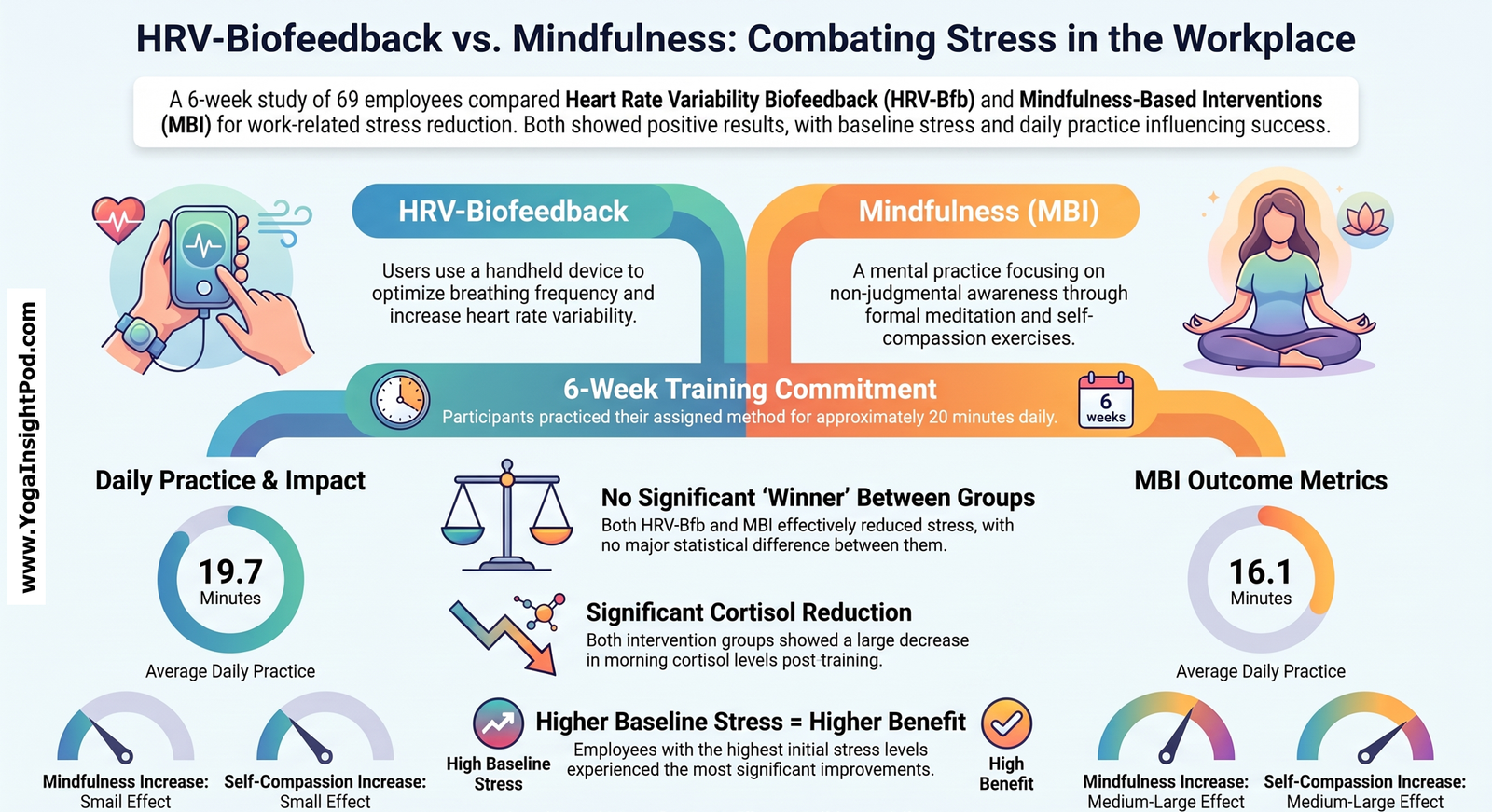
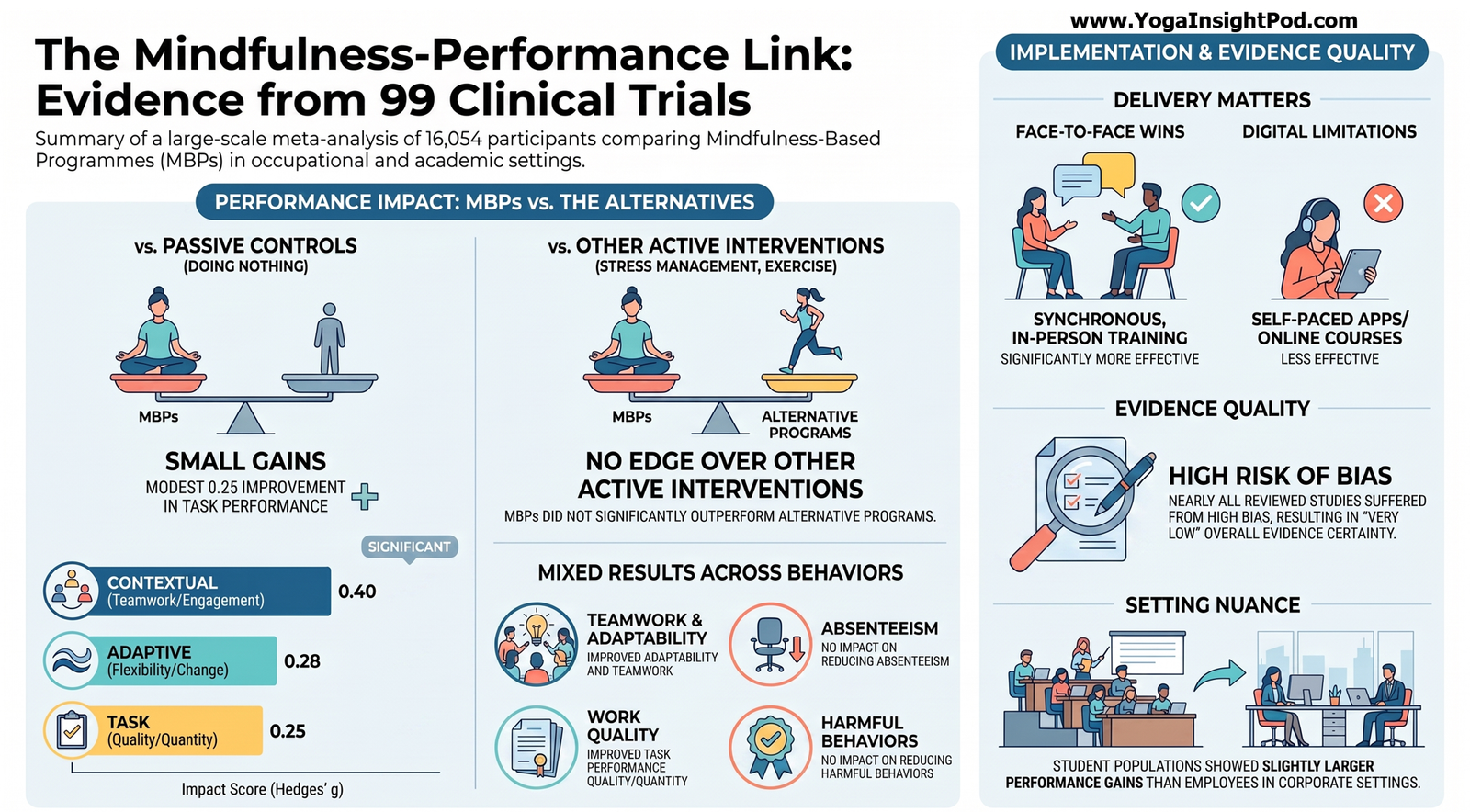
A new meta-analysis of 99 randomized clinical trials by Maris Vainre, Julieta Galante et. al., and team from University of Cambridge, University of Tartu, University of Melbourne, Cambridgeshire and Peterborough NHS Foundation Trust, North East London NHS Foundation Trust, and Norfolk and Suffolk NHS Foundation Trust investigates whether mindfulness-based programs improve productivity, work performance, adaptability, and professional success. Discover what the latest evidence means for employees and organizations.
Mindfulness has become one of the most widely adopted workplace wellness strategies, with organizations investing millions in mindfulness-based programs to improve employee well-being and productivity. But does the scientific evidence actually support these investments?
A recent systematic review and meta-analysis analyzed 99 randomized controlled trials involving more than 16,000 participants, making it one of the most comprehensive evaluations of workplace mindfulness programs to date. The researchers found that mindfulness-based programs produced small but meaningful improvements in task performance when compared with passive controls such as waitlists. Participants also demonstrated improvements in adaptive performance their ability to adjust to changing work demands and contextual performance, which includes teamwork, cooperation, and behaviors that support organizational success. Some benefits appeared to persist for several months after the intervention.
However, the review also found that mindfulness programs did not outperform active comparison interventions, suggesting that other structured training programs may offer similar workplace benefits. Additionally, the overall certainty of the evidence was rated very low, primarily because many studies had methodological limitations and a high risk of bias. The practical takeaway is that mindfulness should not be viewed as a magic productivity tool. Instead, it can be considered one component of a comprehensive workplace wellness strategy that also includes quality sleep, physical activity, healthy leadership, supportive organizational culture, and psychological safety. As higher-quality research continues to emerge, mindfulness remains a promising but still evolving evidence-based approach for improving workplace performance.