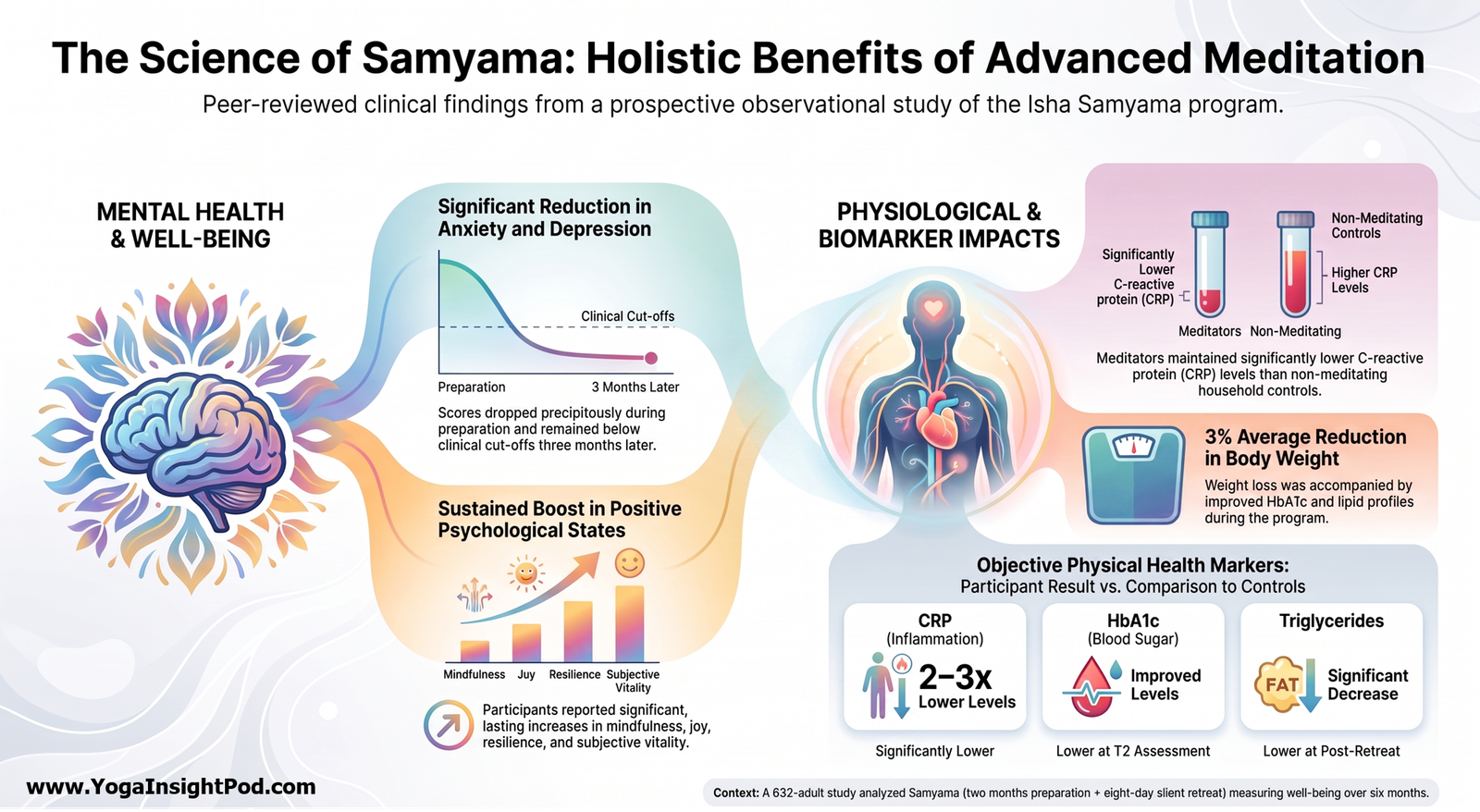
A scientific review of how intensive yoga, meditation, and preparatory lifestyle practices were associated with improvements in anxiety, depression, mindfulness, inflammation, and metabolic health.
Meditation retreats have become increasingly popular, but do they produce measurable physiological changes beyond relaxation? A prospective observational study published in Frontiers in Psychology by Senthilkumar Sadhasivam and team from Indiana University School of Medicine, University of Louisville, Beth Israel Deaconess Medical Center, Lawrence Berkeley National Laboratory, Ascension Health, St. Vincent Hospital and Rutgers University investigated participants completing the Isha Foundation's Samyama program, one of the most intensive meditation retreats currently available.
Unlike many meditation studies, researchers evaluated both psychological outcomes and objective biological markers. Participants completed approximately two months of daily yoga, kriya, meditation, and a structured vegan diet before attending an eight-day silent meditation retreat.
The study found significant reductions in anxiety and depression, particularly among individuals who began with elevated symptoms. Improvements in mindfulness, resilience, vitality, and joy were maintained for at least three months after the retreat. Researchers also observed measurable physical changes. Participants experienced modest weight loss, lower HbA1c (a marker of long-term blood glucose), improved triglyceride levels, and consistently lower C-reactive protein (CRP), an important marker of systemic inflammation, compared with household controls. An especially interesting finding was that many psychological improvements began during the two-month preparation period, suggesting that consistent daily yoga, breathwork, meditation, and healthy lifestyle practices may contribute substantially to the observed benefits not only the retreat itself.
Although the study was observational rather than randomized, it provides valuable scientific evidence supporting the role of intensive mind-body practices in promoting psychological well-being and cardiometabolic health. Larger randomized clinical trials are needed to confirm these findings and determine which elements of the program contribute most to the improvements.