A new randomized controlled trial by Helen Lavretsky and team at University of California Los Angeles and Alzheimer’s Research and Prevention Foundation suggests that yoga may help preserve brain structure in women at risk for Alzheimer's disease. Learn how Kundalini Yoga and meditation could support healthy brain aging.
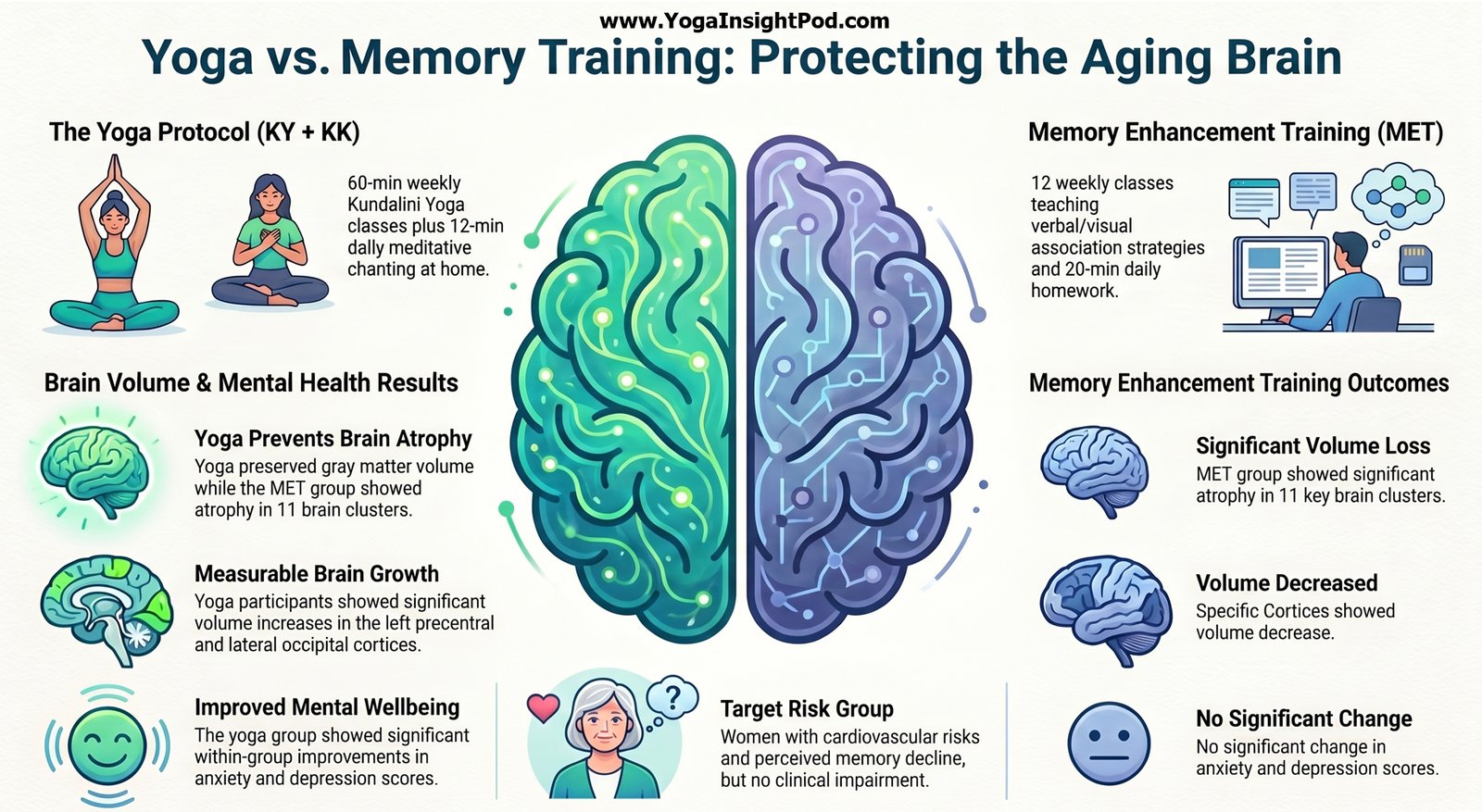
As concerns about Alzheimer's disease continue to grow, researchers are increasingly searching for lifestyle interventions that can help protect the aging brain. A recent randomized controlled trial published in the Journal of Alzheimer's Disease offers promising evidence that yoga may be one of those tools. Researchers from UCLA studied women who had subjective cognitive decline and cardiovascular risk factors two important risk factors associated with Alzheimer's disease. Participants were assigned either to a 12-week Kundalini Yoga program combined with daily Kirtan Kriya meditation or to a memory enhancement training program.
Brain MRI scans revealed a remarkable finding: women practicing yoga maintained gray matter volume across multiple brain regions, while the memory-training group showed reductions in gray matter in areas commonly affected by aging and neurodegeneration. Some regions in the yoga group even demonstrated increases in brain volume. Beyond brain structure, yoga participants also experienced significant improvements in anxiety and depression. These psychological benefits may be particularly important because chronic stress is increasingly recognized as a contributor to cognitive decline and brain aging.
The researchers suggest that yoga's combination of movement, breathing exercises, meditation, chanting, and focused attention may stimulate multiple brain systems simultaneously, potentially supporting neuroplasticity and resilience. While larger studies are still needed, these findings provide encouraging evidence that yoga may be a safe, accessible, and science-backed strategy to support healthy brain aging and potentially reduce Alzheimer's disease risk. For anyone interested in maintaining cognitive health as they age, this research offers another compelling reason to roll out the yoga mat.