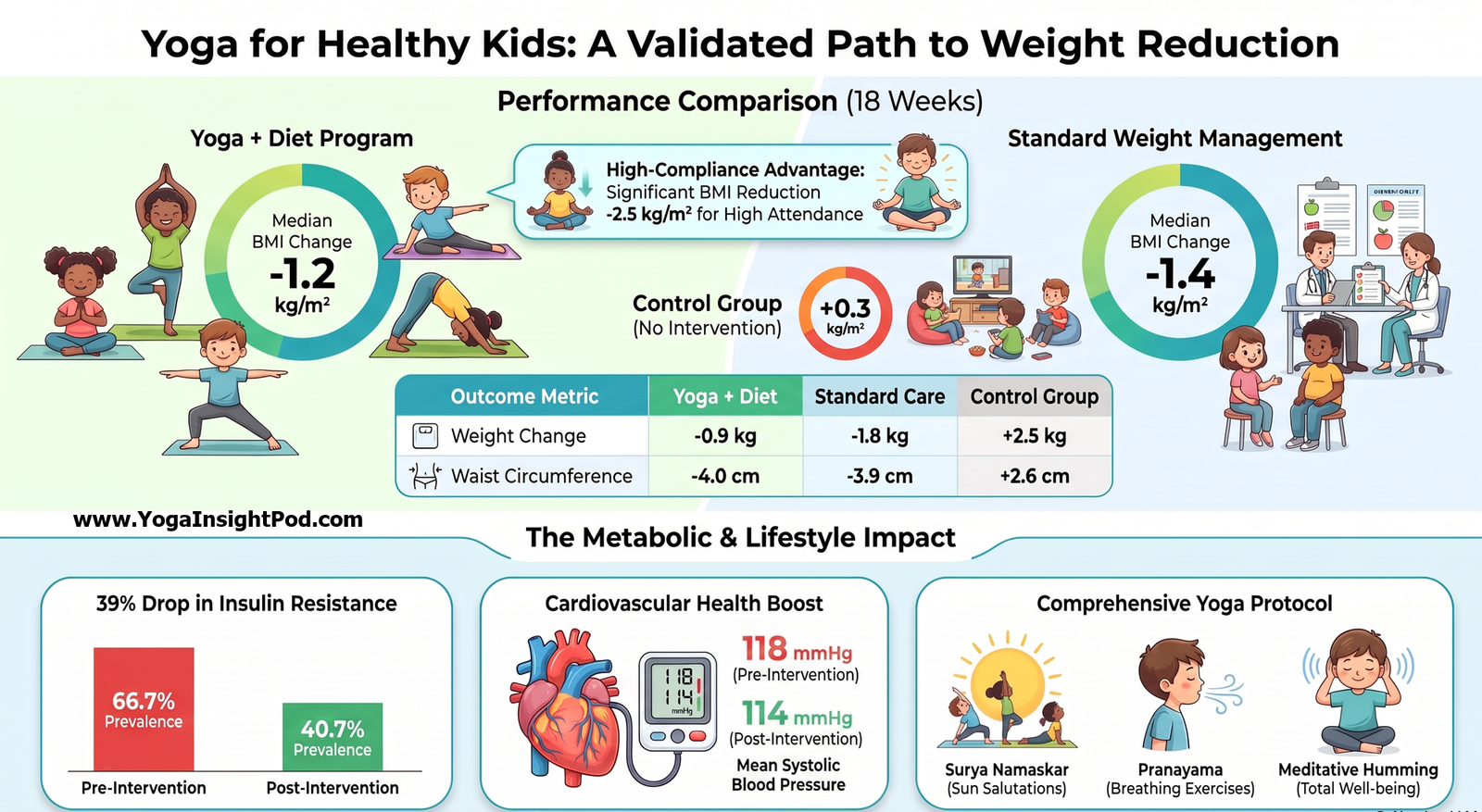
A randomized controlled trial by Vandana Jain and team from All India Institute of Ayurveda investigated whether a comprehensive yoga program combined with dietary modification could reduce BMI and improve health indicators in children and adolescents with obesity.
Childhood obesity can be associated with insulin resistance, high blood pressure, abnormal cholesterol levels, psychological distress, and an increased risk of chronic disease later in life. Researchers therefore examined whether yoga could provide an effective and family-centered approach to pediatric weight management. The randomized controlled trial enrolled 165 children between 8 and 15 years of age. Participants were assigned to standard weight management, yoga combined with dietary modification, or a control group receiving no intervention for 18 weeks.
The yoga program included humming, loosening exercises, Surya Namaskar, standing and floor postures, pranayama, and relaxation in Shavasana. Children initially attended supervised sessions and were later encouraged to practice at home for approximately one hour at least five times per week. A parent was also asked to participate. At 18 weeks, median BMI decreased by 1.2 kg/m² in the yoga group and 1.4 kg/m² in the standard weight-management group. BMI increased in the control group. Approximately 60 percent of children in the yoga group achieved a BMI reduction of at least 1 kg/m².
The yoga group also experienced an approximately four-centimeter reduction in waist circumference and a significant reduction in systolic blood pressure. The proportion of participants with elevated insulin resistance declined as well. Yoga was not superior to standard dietary and lifestyle management. However, the findings suggest that yoga combined with dietary modification can be an effective option for supporting weight reduction and cardiometabolic health in children and adolescents with obesity.