A randomized pilot study by Jessica L Unick and team from The Miriam Hospital, Warren Alpert Medical School at Brown University, Brown University School of Public Health, University of Pittsburgh, and Pennington Biomedical Research Center explored whether Iyengar yoga could support weight-loss maintenance after a behavioral weight-loss program. The findings suggest that yoga’s potential benefits may depend on how much weight participants initially lost.
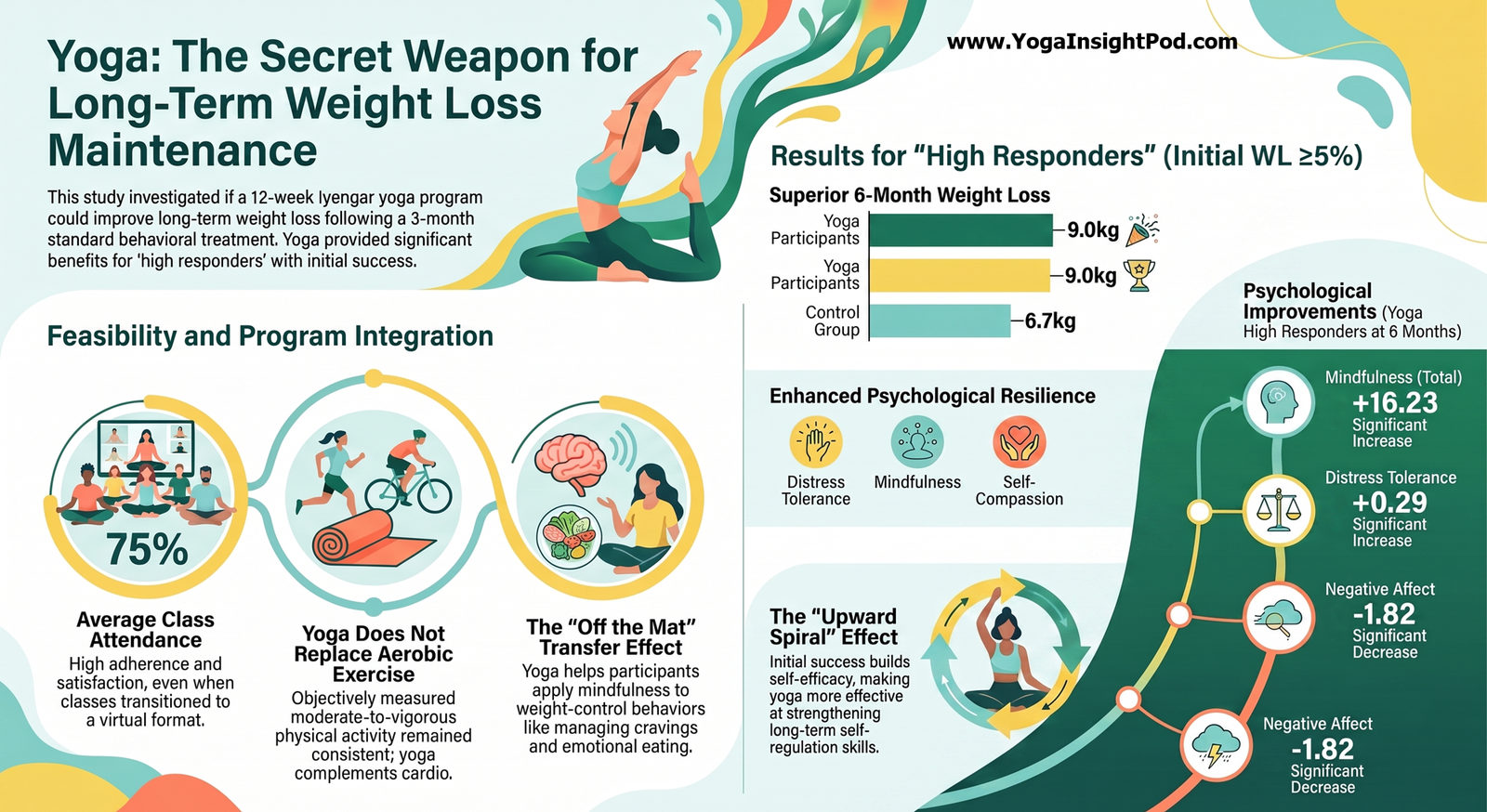
Losing weight can be difficult, but maintaining weight loss may be even more challenging. Stress, negative emotions, food cravings, and difficulty recovering from dietary lapses can interfere with long-term adherence to healthy behaviors. A randomized trial investigated whether yoga could support women with overweight or obesity after they completed a three-month behavioral weight-loss program. Sixty participants were assigned to either 12 weeks of Iyengar yoga or an equivalent program of cooking and nutrition education. The yoga classes were offered twice weekly and included postures, breathing practices, relaxation, and Savasana.
Across the full study sample, the yoga and control groups did not differ significantly in weight loss at six months. However, a different pattern emerged among participants who had already lost at least 5% of their body weight during the initial behavioral program. In this subgroup, participants assigned to yoga achieved greater total weight loss than those receiving cooking and nutrition education. Yoga participants with higher initial weight loss also demonstrated greater mindfulness, distress tolerance, and self-compassion, along with lower negative affect. These psychological skills may help people pause before reacting to cravings, tolerate uncomfortable emotions, and respond more constructively after overeating or other setbacks.
Importantly, yoga did not reduce participants’ moderate-to-vigorous physical activity, suggesting that it was added to not substituted for aerobic exercise. The findings are preliminary and based on a small sample of predominantly White women. Nevertheless, the study suggests that yoga may be a promising complementary strategy for supporting weight-loss maintenance, particularly after clinically meaningful initial weight loss.