A major clinical trial by Erik J Groessl and team at VA San Diego Healthcare System, University of California San Diego, VA Center of Excellence in Stress and Mental Health, and Southern California University of Health Sciences found that yoga can improve pain and physical function in military veterans living with chronic low back pain. Learn how yoga may offer a safe, evidence-based complement to traditional pain management.
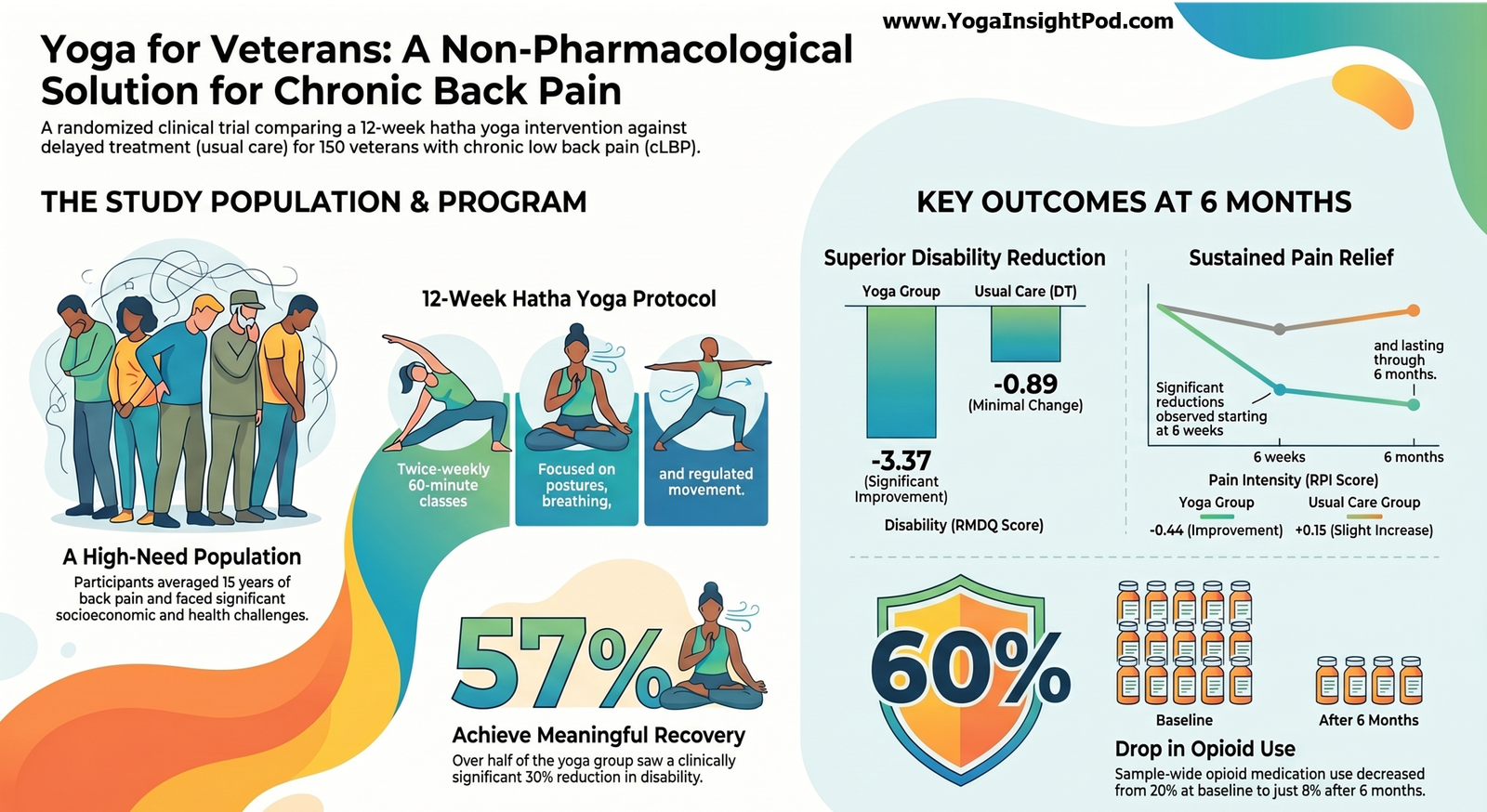
Chronic low back pain is one of the most common and disabling health conditions among military veterans. It affects daily function, quality of life, and often leads to long-term medication use. A randomized clinical trial led by Erik Groessl and colleagues examined whether yoga could serve as a safe and effective non-drug treatment for veterans experiencing chronic low back pain. The study enrolled 150 military veterans and compared a 12-week yoga program with a delayed-treatment control group. Participants attended yoga classes twice weekly and practiced at home between sessions. The yoga intervention included physical postures, breathing techniques, movement, and focused attention practices.
Researchers found that veterans practicing yoga experienced greater reductions in pain intensity compared with the control group. While improvements in disability were modest at first, significant gains emerged by the six-month follow-up, suggesting that yoga's benefits may continue to grow over time. Notably, more than half of yoga participants achieved clinically meaningful improvements in function after six months. The findings are especially important because veterans often face additional challenges, including chronic pain, disability, psychological stress, and limited access to non-drug therapies. The study supports yoga as a safe, accessible, and evidence-based tool that may complement conventional treatment while supporting broader efforts to reduce opioid dependence. For veterans and healthcare providers alike, this research highlights yoga's growing role in integrative pain management and long-term recovery.