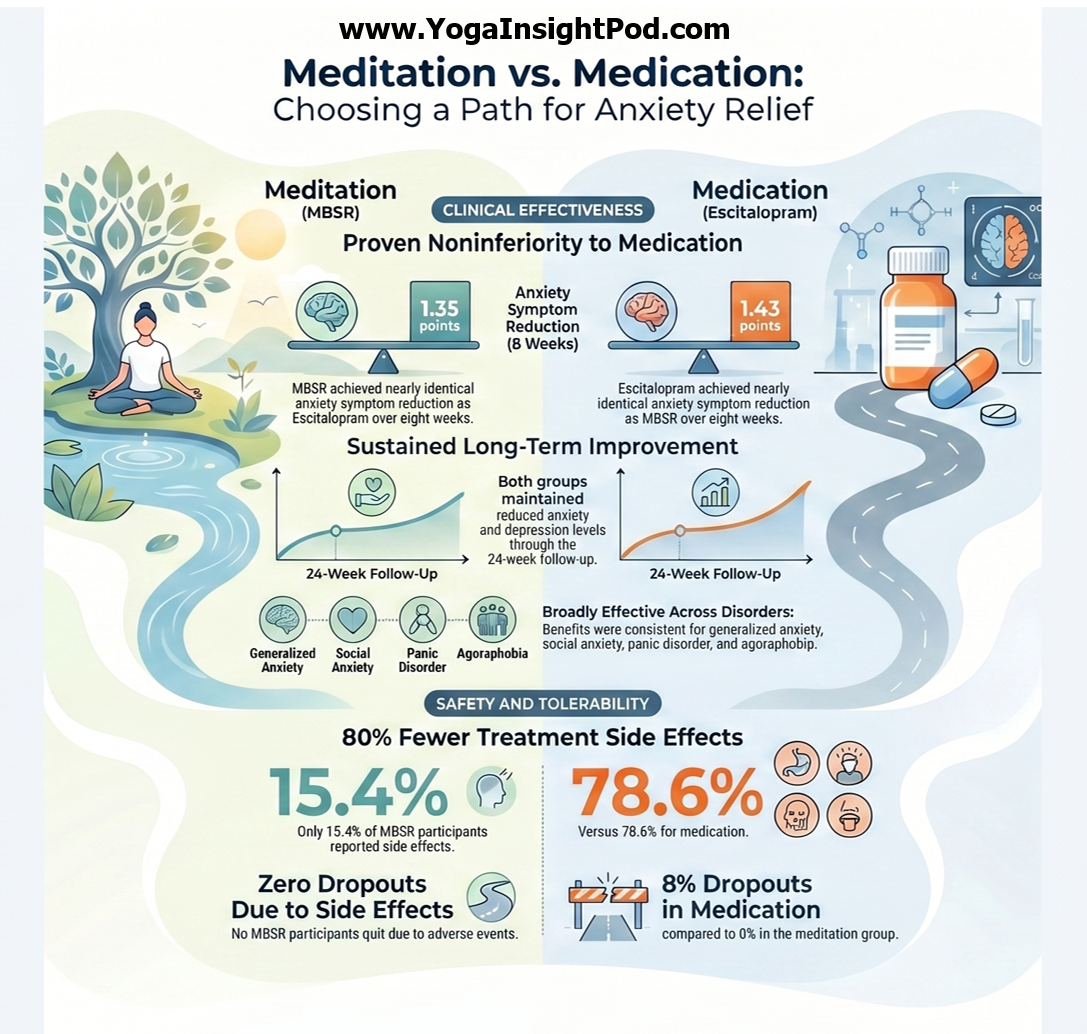
Can mindfulness meditation work as well as medication for anxiety? Two major clinical trials studies by Elizabeth Hoge and team from Georgetown University Medical Center, Caen University Hospital & UNICAEN, Medstar Health Research Institute, Massachusetts General Hospital, Harvard Medical School, New York University Grossman School of Medicine found that Mindfulness-Based Stress Reduction (MBSR) produced anxiety improvements comparable to escitalopram, with substantially fewer side effects. Discover what this means for individuals seeking evidence-based alternatives for anxiety treatment.
Anxiety disorders affect millions of people worldwide and are commonly treated with medications such as escitalopram, a widely prescribed selective serotonin reuptake inhibitor (SSRI). However, growing interest in non-pharmacological approaches has led researchers to investigate whether mindfulness meditation can offer similar benefits. Two landmark clinical studies recently addressed this question. The first, published in JAMA Psychiatry, compared an 8-week Mindfulness-Based Stress Reduction (MBSR) program with escitalopram in adults diagnosed with generalized anxiety disorder, social anxiety disorder, panic disorder, or agoraphobia. Researchers found that MBSR was noninferior to escitalopram, meaning it reduced anxiety symptoms to a similar degree. Importantly, participants in the mindfulness group experienced far fewer treatment-related adverse effects.
A second study published in JAMA Network Open examined additional patient-reported outcomes from the same trial, including anxiety, depression, quality of life, and social functioning. The findings showed that both treatments produced meaningful improvements, with no clinically significant differences between mindfulness meditation and medication at the end of treatment. While escitalopram showed slightly faster symptom reduction during the early weeks, the overall outcomes were comparable by the end of the study. These findings suggest that mindfulness meditation is more than a wellness trend it is an evidence-based intervention for anxiety disorders. For many individuals, especially those concerned about medication side effects or seeking complementary approaches, structured mindfulness training may provide a safe and effective treatment option. While mindfulness is not a replacement for professional medical care, these studies highlight its growing role in modern mental health treatment and offer hope for individuals seeking additional pathways to managing anxiety and improving overall well-being.