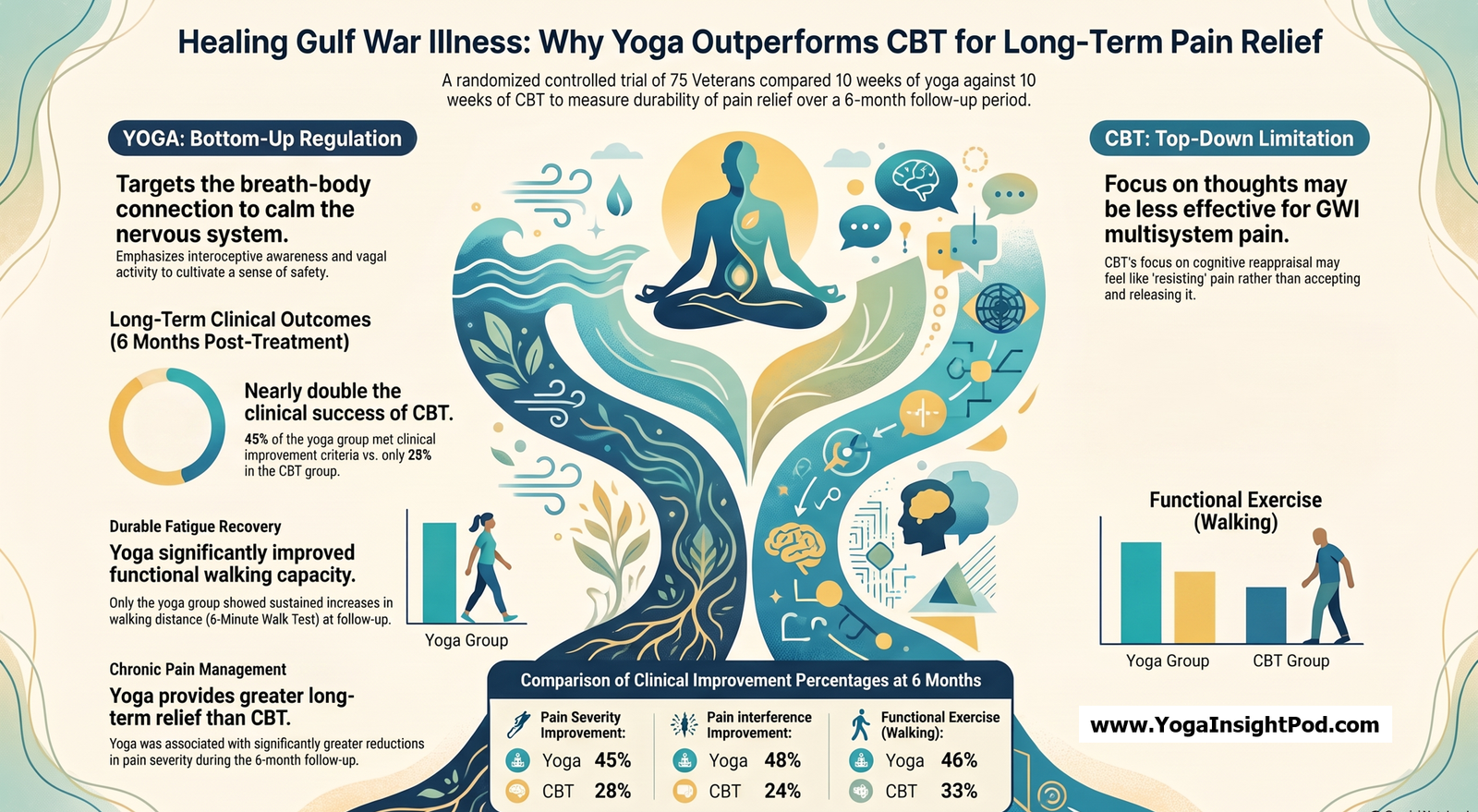
Can the benefits of a short yoga program continue months after classes end? A randomized clinical trial follow-up by Santiago Allende and colleagues from the VA Palo Alto Health Care System, Stanford University School of Medicine, Murdoch University, Peninsula Behavioral Health, and the Peninsula Vet Center examined the longer-term effects of yoga on chronic pain and physical function in Veterans with Gulf War Illness.
For people living with chronic pain, an important question is not simply whether a treatment works immediately but whether its benefits can last.
A study by Santiago Allende and colleagues examined the longer-term effects of yoga in 75 Veterans with Gulf War Illness and chronic pain. Participants had previously been randomized to either 10 weeks of yoga or 10 weeks of cognitive behavioral therapy (CBT) and were followed for six months after treatment. The yoga program was more than a sequence of stretches. It incorporated breath-linked Hatha yoga postures, awareness of breathing, adaptable movements, controlled breathing, hand gestures, vocalization, and meditation. Participants attended a 60-minute class once a week and were encouraged to practice at home for 15–30 minutes on five additional days.
During the six-month follow-up period, the yoga group showed a greater reduction in pain severity than the CBT group. Within the yoga group, researchers also observed improvements in pain interference, overall pain scores, and walking distance.
At six months, 45% of yoga participants who completed the pain-severity assessment met the study's criterion for clinical improvement, compared with 28% in the CBT group, although this categorical between-group comparison was not statistically significant. The findings suggest that yoga's combination of movement, breath awareness, meditation, and adaptable practice may have value as a longer-term approach to chronic pain management for some Veterans.