Yoga may offer older adults much more than flexibility. A 2026 Perspective by Aditi Garg, Carolina Estevao, and Saamdu Chetri from Shoolini University and King’s College London examines how movement, breath regulation, mindfulness, and adapted yoga practices may support physical function, mental wellbeing, cognitive health, and healthy ageing.
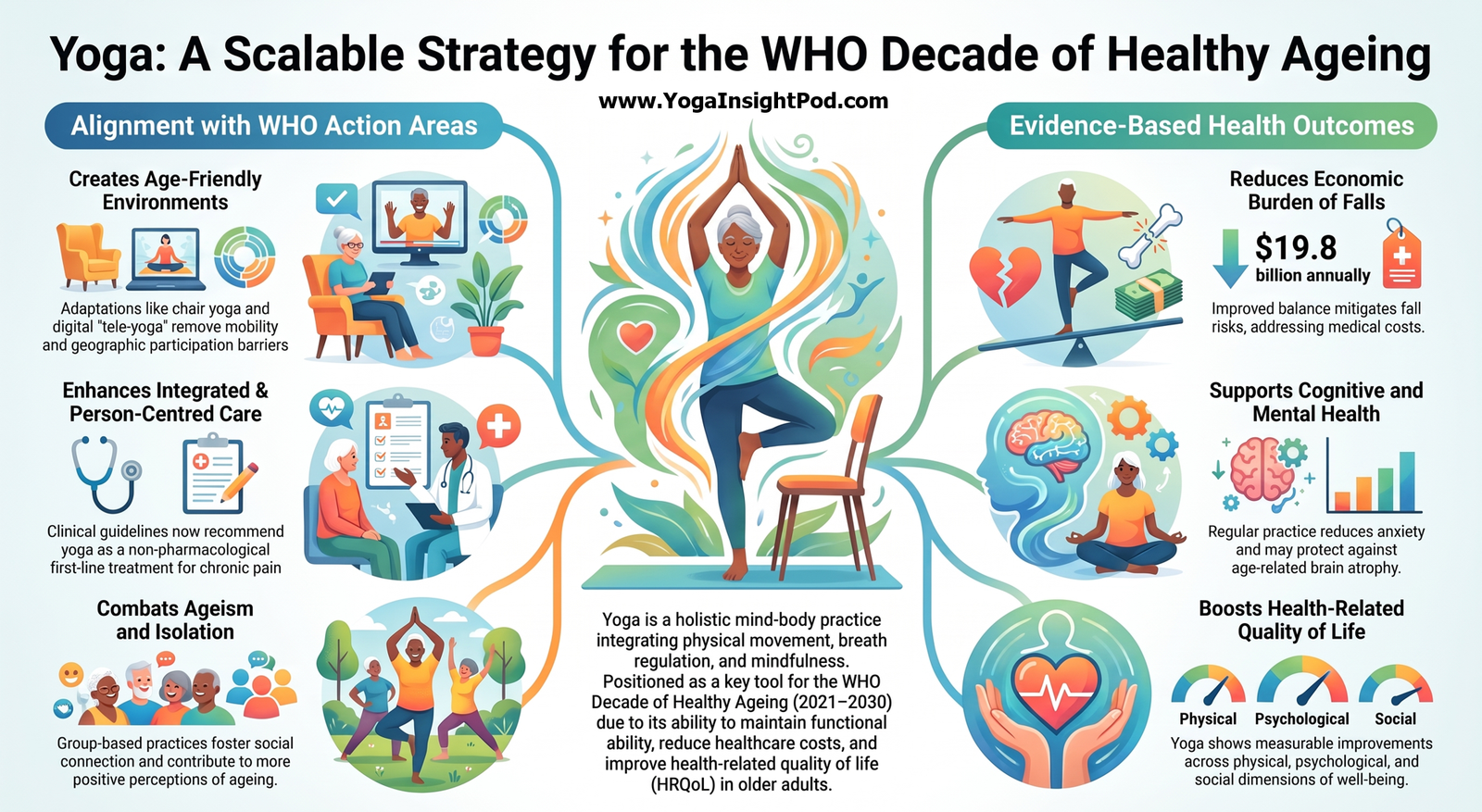
Living longer is only part of the goal of healthy ageing. Maintaining functional ability, independence, social participation, and wellbeing is equally important. A 2026 Perspective by Aditi Garg, Carolina Estevao, and Saamdu Chetri examines how yoga may contribute to these goals within the WHO Decade of Healthy Ageing. Yoga combines physical postures, breath regulation, and mindfulness and can be adapted for a wide range of functional abilities.
The evidence discussed in the publication suggests that regular yoga practice may support flexibility, balance, mobility, physical function, and health-related quality of life. These abilities are especially important for maintaining independence as people age. Benefits may extend beyond the body. Yoga research in older adults has reported potential improvements in attention, memory, executive function, mood, stress, and psychological wellbeing. Practices combining movement, breathing, and meditation may therefore offer a multidimensional approach to healthy ageing. Importantly, yoga does not have to mean difficult poses. Chair yoga, wall support, props, restorative postures, slow transitions, and gentle breathing practices can make yoga more accessible to older adults with different mobility levels.
The authors conclude that yoga remains underused within ageing and healthcare frameworks despite its adaptability and growing evidence base. Future opportunities include community programs, tele-yoga, social prescribing, and integration into person-centered healthy-ageing strategies.