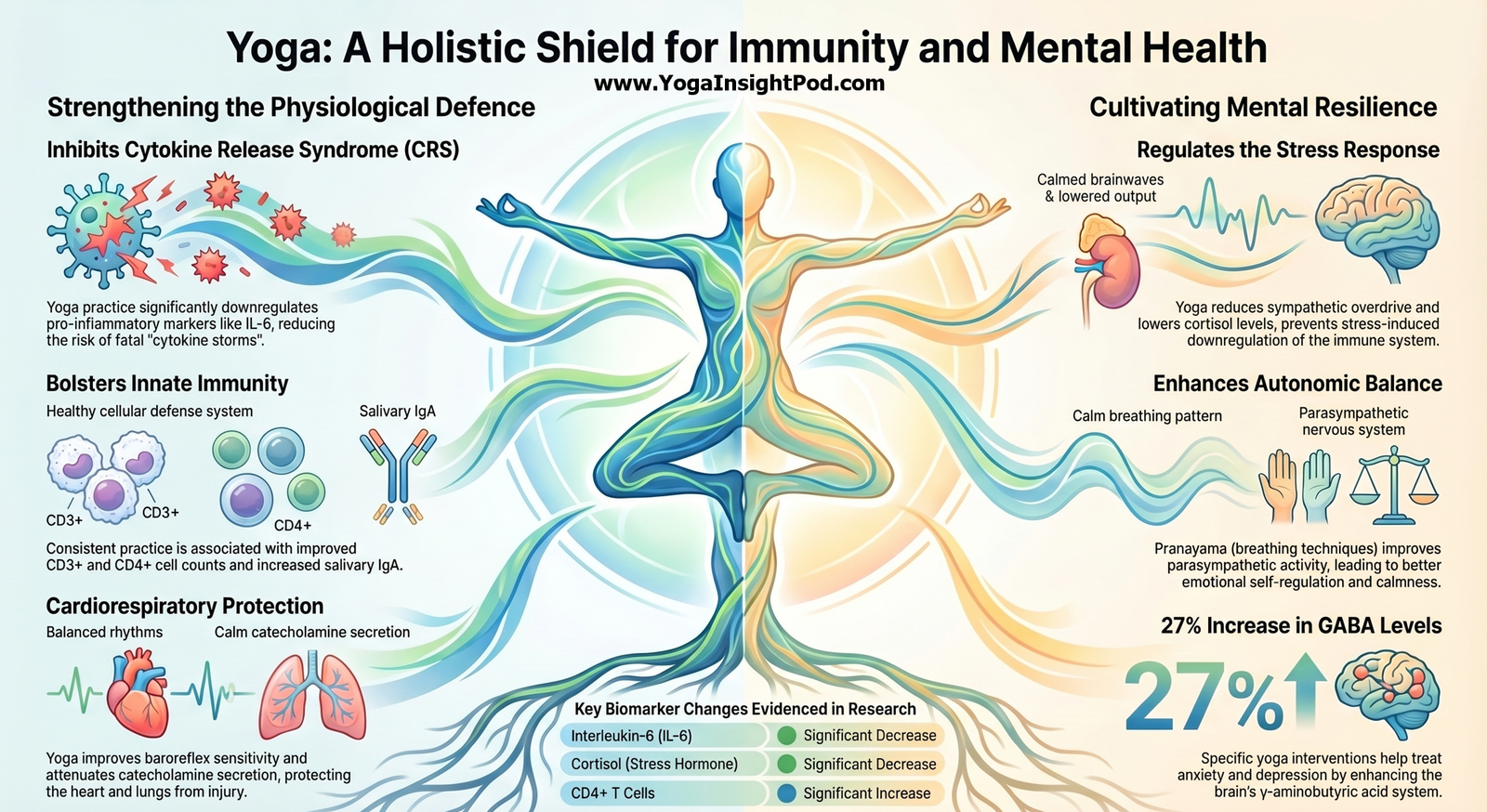
A 2022 BMC narrative review by Indranill Basu-Ray et. al., and collaborators from Memphis VA Medical Center, The University of Memphis, Memphis, Icahn School of Medicine at Mount Sinai, Swami Vivekananda Yoga Anusandhana Samsthana, Bangalore, Morarji Desai National Institute of Yoga, Ministry of AYUSH, Baylor College of Medicine, University of Duisburg-Essen, Essen, Massachusetts General Hospital, Boston and others concludes that yoga may help modulate key inflammatory cytokines, strengthen innate and adaptive immunity, and reduce stress, anxiety, and depression relevant to COVID-19 risk and recovery. The authors position yoga as a safe, accessible complementary intervention alongside vaccination and standard medical care.
A 2022 narrative review in BMC Complementary Medicine and Therapies by Indranill Basu-Ray et. al., and collaborators argues that yoga may offer a low-cost, low-risk way to support both immune function and mental health during the COVID-19 pandemic. The authors synthesize evidence on how components of yoga postures, pranayama, meditation, and relaxation interact with neuroendocrine and immune pathways that are central to SARS‑CoV‑2 outcomes, particularly cytokine release syndrome and stress-related immune dysregulation.
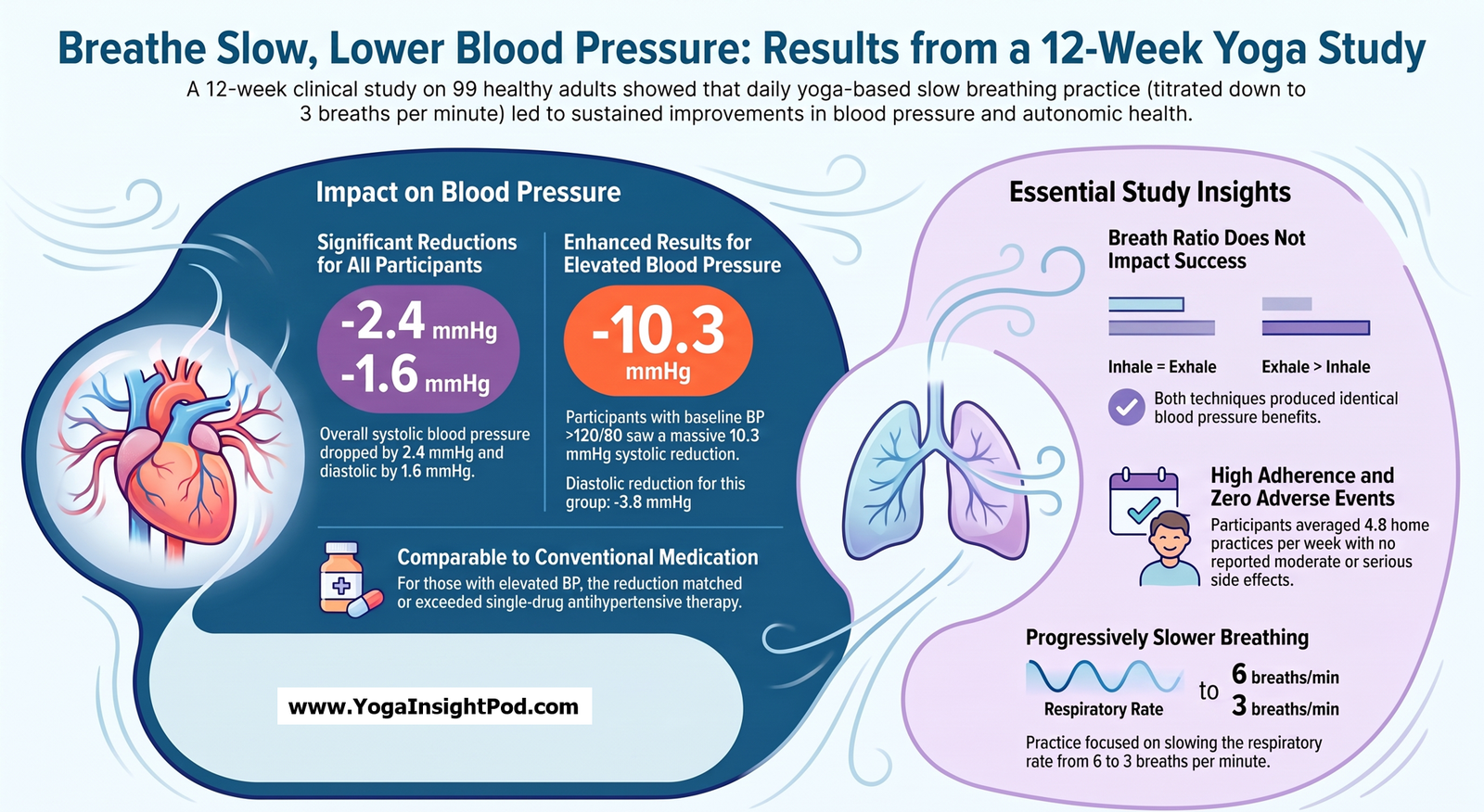
On the immunological side, the review highlights studies in which regular yoga practice is associated with improved innate and adaptive immune responses, including enhanced natural-killer cell activity, better antibody responses, and modulation of key inflammatory cytokines such as IL‑6, TNF‑α, and IL‑1β. Randomized trials cited in the paper show that yoga-based programs can reduce circulating IL‑6 in both healthy individuals and clinical populations, sometimes in a dose response manner, and may blunt exaggerated inflammatory reactions that parallel the cytokine storm seen in severe COVID-19. At the same time, yoga appears to positively affect cardiometabolic risk factors blood pressure, glucose metabolism, and autonomic balance that are known to worsen COVID-19 prognosis.
The review also emphasizes the pandemic’s psychological toll chronic stress, anxiety, depression, loneliness, and economic insecurity all of which are linked to HPA-axis dysregulation, elevated cortisol, and impaired antiviral immunity. Across multiple studies and meta-analyses, yoga interventions are reported to reduce perceived stress, anxiety, and depressive symptoms; normalize autonomic function via increased parasympathetic activity; improve sleep and cognitive functioning; and foster greater mindfulness, self-regulation, and emotional resilience. While the authors stress that yoga cannot replace vaccination, masking, or medical treatment, they propose it as an accessible adjunct to bolster baseline immune competence, mitigate inflammatory risk, and support mental well-being in both the general population and people recovering from COVID-19. They call for rigorously designed trials directly testing standardized yoga protocols as preventive and rehabilitative tools in COVID-19 and future pandemics.