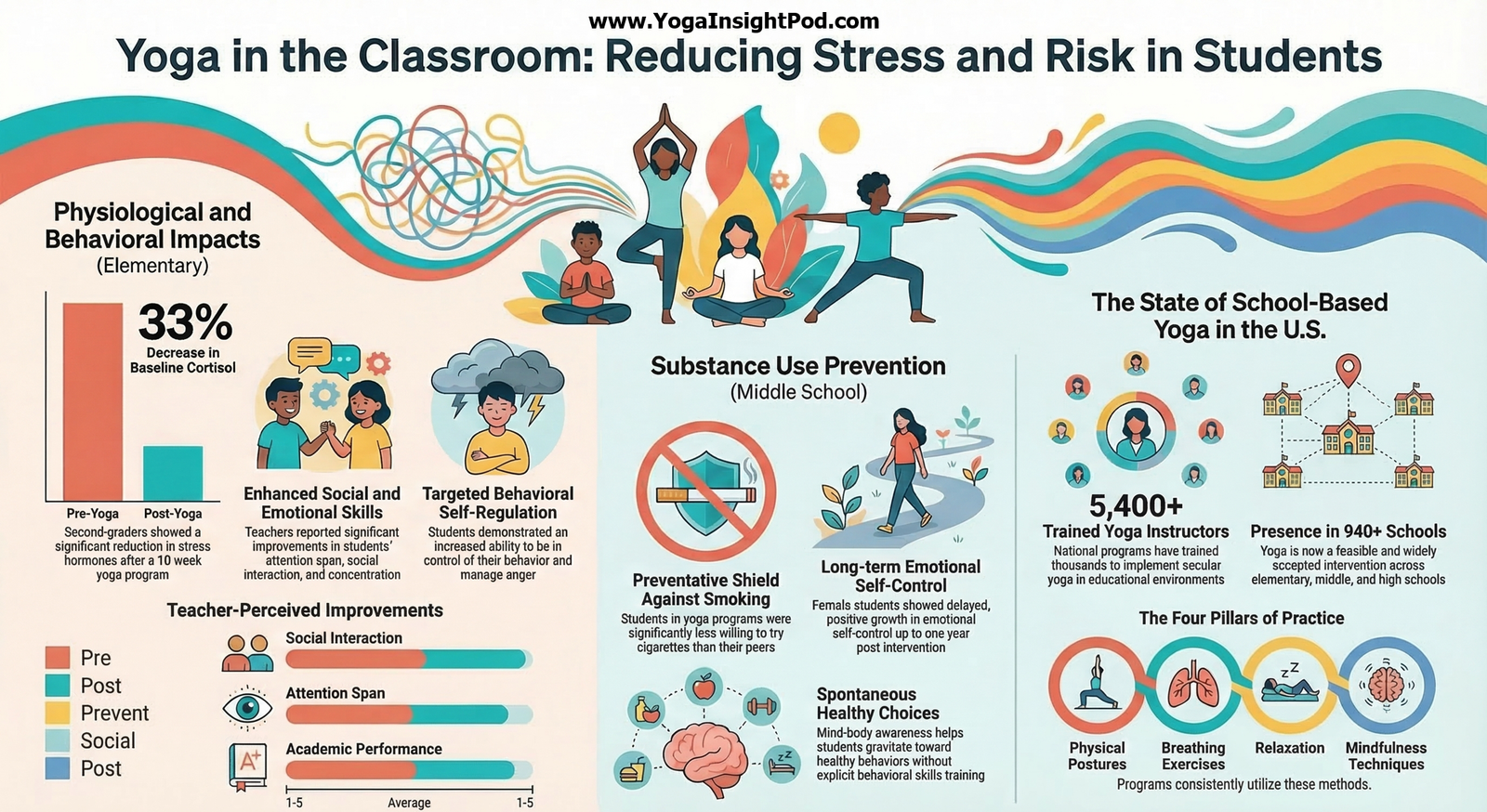
Research led by Sat Bir S. Khalsa from Harvard Medical School and colleagues highlights how school-based yoga programs may support student stress regulation, mood, behavior, and learning readiness. This brief overview summarizes key findings from U.S. studies across grade levels.
Interest in integrating yoga into U.S. school systems has grown steadily, supported by a developing body of research led by Sat Bir S. Khalsa from Harvard Medical School and collaborators. Across elementary, middle, and high school settings, school-based yoga programs typically combine postures, breathing practices, relaxation techniques, and mindfulness to support students’ psychological and behavioral well-being.
Evidence from classroom-based interventions suggests yoga may help regulate stress physiology and improve observable classroom behavior. For example, pilot work in younger students reported reductions in baseline cortisol alongside teacher-observed improvements in cognitive, social, and emotional functioning following a structured school yoga program. These findings align with broader surveys indicating widespread implementation of yoga programs across U.S. schools, often designed to enhance self-regulation, attention, and prosocial behavior.
Research in adolescents further demonstrates that yoga participation may improve mood and affect. Compared with standard physical education classes, yoga has been associated with greater reductions in anger, fatigue, and depressive mood states, along with decreases in negative affect. Collectively, these studies suggest that yoga may provide complementary benefits beyond traditional school programming by strengthening emotional regulation and stress-management skills.
Although methodological limitations remain in parts of the literature, the growing evidence base supports continued evaluation of yoga as a feasible, scalable, and evidence-informed approach to promoting student well-being in educational settings.