
Research driven conversations that unpack peer reviewed studies and clinical findings to explain how yogic practices influence health, stress regulation, and human biology in everyday life.

A podcast translating yoga research into practical, evidence based insight.

Explore evidence based strategies to manage stress, burnout, change fatigue, focus, and emotional resilience, offering insights relevant to healthier, more productive workplaces.

Examine peer reviewed studies, clinical trials, biomarkers, and mechanistic pathways, translating research on yoga and contemplative practices into thoughtful, scientifically grounded dialogue.

Complex science is made approachable, empowering listeners to understand how yogic practices support mental health, nervous system balance, and overall well being in everyday life.

Can mindfulness practice help employees manage workplace stress, and how does it compare with HRV bi...

Can deliberately slowing the breath influence blood pressure over time? This episode of www.YogaInsi...

Can chair-based yoga offer older adults more than gentle exercise? This episode of www.YogaInsightPo...
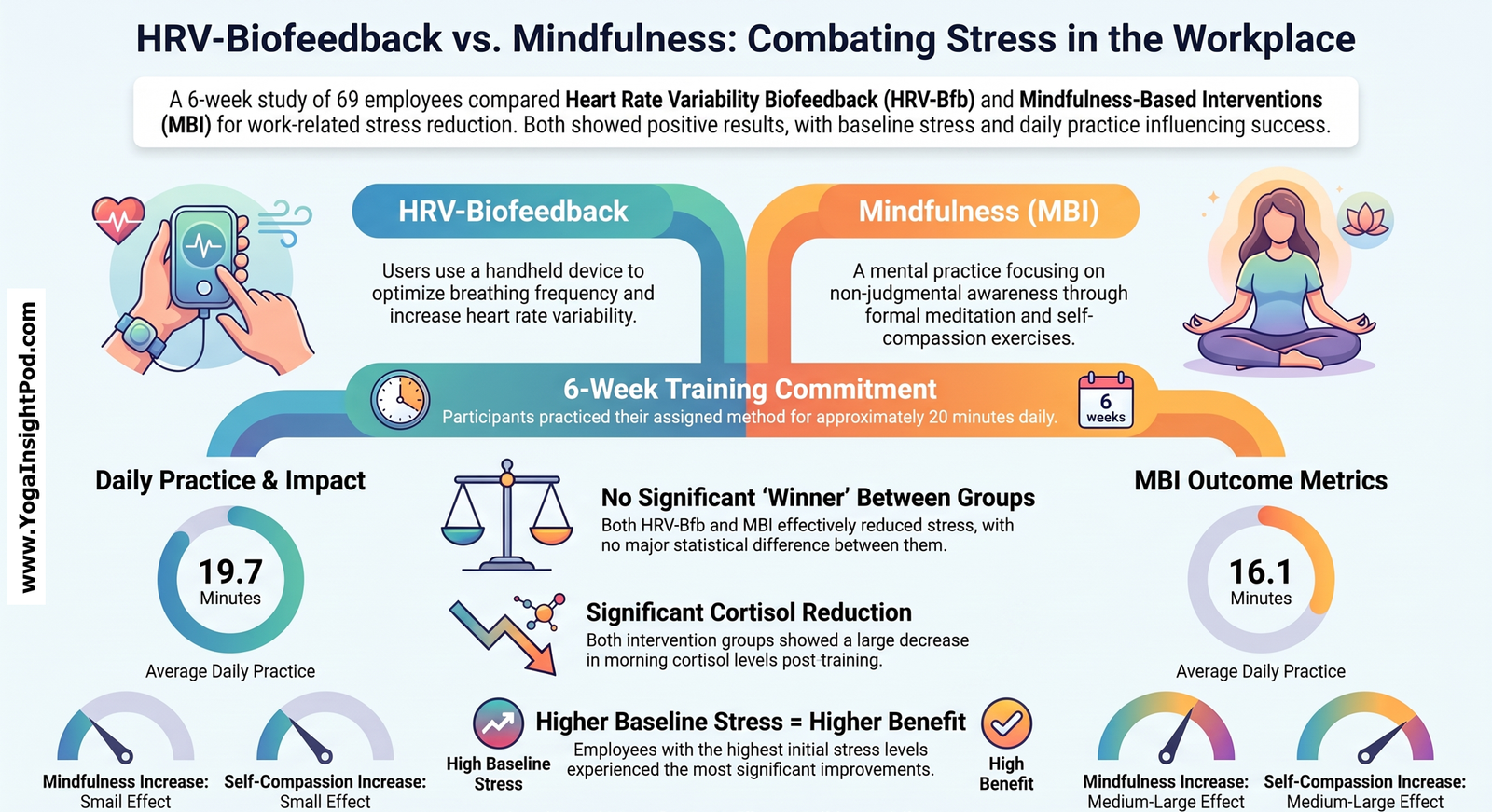
A six-week randomized controlled trial by Amelie Edith Brinkmann and colleagues from the University of Tuebingen, ARCIM Institute for Academic Research in Complementary and Integrative Medicine, Harvard Medical School, and University Hospital Tuebingen compared mindfulness training with HRV biofeedback for workplace stress reduction. The findings showed increases in mindfulness and self-compassion within the mindfulness group, while also highlighting the challenges of interpreting workplace stress interventions in real-world organizational settings.
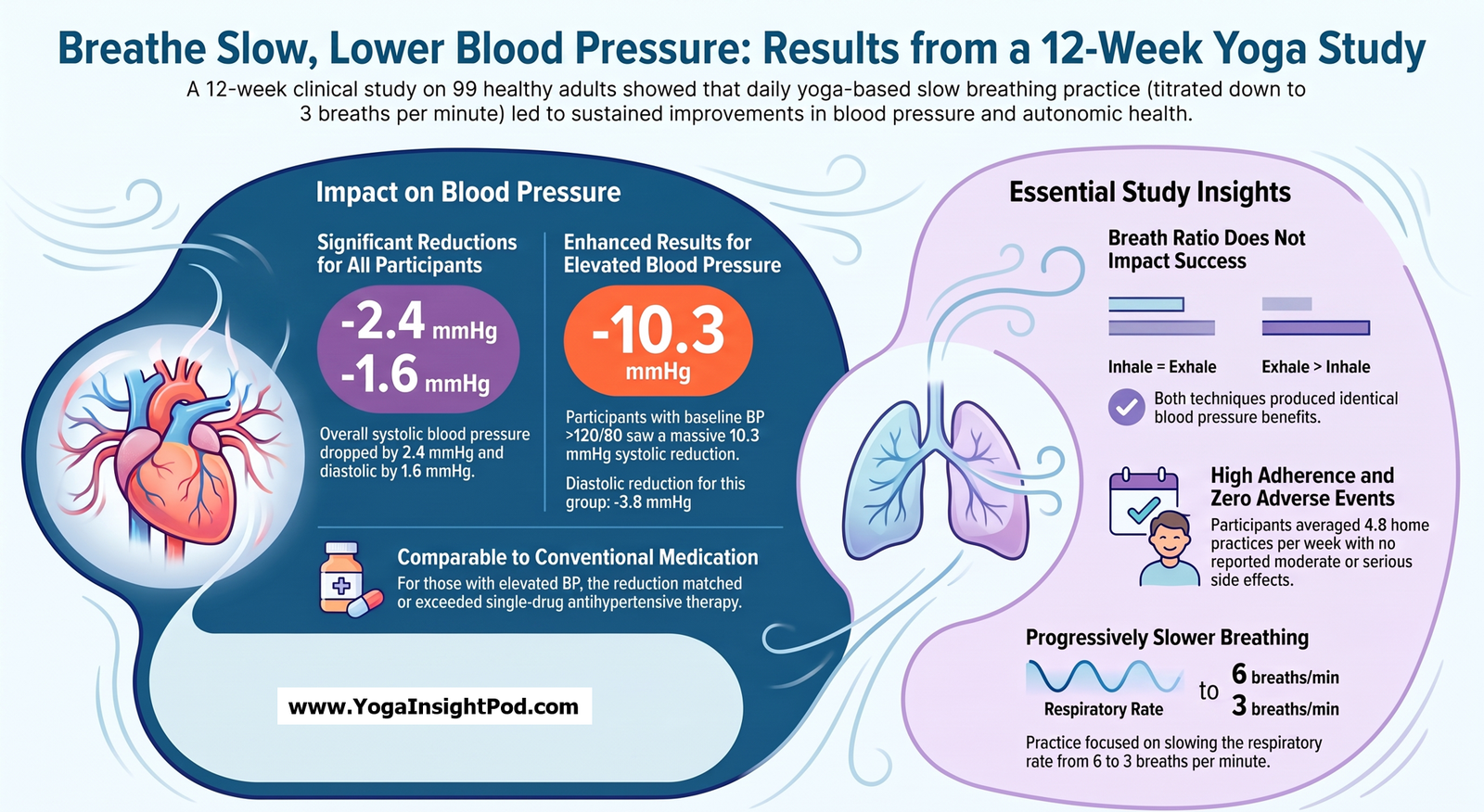
A 12-week study by Gurjeet Birdee and colleagues from Vanderbilt University Medical Center, Vanderbilt University, and Yoga Well investigated whether progressively slowing the breath through yoga-based breathing exercises was associated with changes in blood pressure and autonomic function. The findings provide an intriguing look at the potential cardiovascular effects of regular pranayama-style breathing.
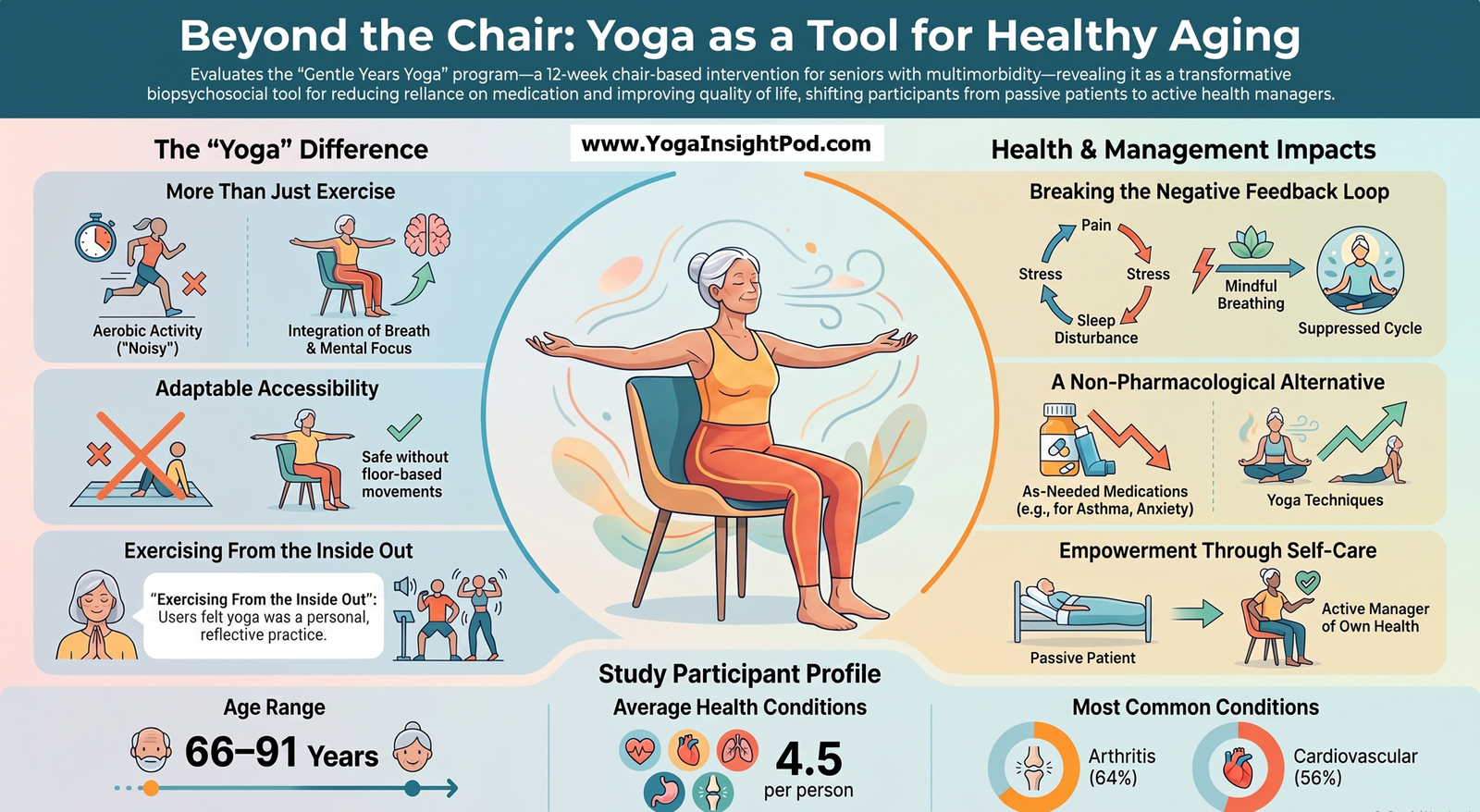
A chair may make yoga more accessible, but does the practice still offer meaningful physical and mental experiences? A qualitative evaluation of the Gentle Years Yoga trial, led by Lesley Ward and colleagues from Northumbria University, York St John University, the University of York, and British Wheel of Yoga Qualifications, explored what older adults themselves said after participating in a 12-week chair-based yoga program.